[fusion_builder_container hundred_percent=”no” equal_height_columns=”no” menu_anchor=”” hide_on_mobile=”small-visibility,medium-visibility,large-visibility” class=”” id=”” background_color=”” background_image=”” background_position=”center center” background_repeat=”no-repeat” fade=”no” background_parallax=”none” parallax_speed=”0.3″ video_mp4=”” video_webm=”” video_ogv=”” video_url=”” video_aspect_ratio=”16:9″ video_loop=”yes” video_mute=”yes” overlay_color=”” video_preview_image=”” border_color=”” border_style=”solid” padding_top=”” padding_bottom=”” padding_left=”” padding_right=”” type=”legacy” admin_toggled=”no”][fusion_builder_row][fusion_builder_column type=”2_3″ layout=”1_1″ background_position=”left top” background_color=”” border_color=”” border_style=”solid” border_position=”all” spacing=”yes” background_image=”” background_repeat=”no-repeat” padding_top=”” padding_right=”” padding_bottom=”” padding_left=”” margin_top=”0px” margin_bottom=”0px” class=”” id=”” animation_type=”” animation_speed=”0.3″ animation_direction=”left” hide_on_mobile=”small-visibility,medium-visibility,large-visibility” center_content=”no” last=”false” min_height=”” hover_type=”none” link=”” border_sizes_top=”” border_sizes_bottom=”” border_sizes_left=”” border_sizes_right=”” first=”true” spacing_right=”2.6666666666666665%”][fusion_text columns=”” column_min_width=”” column_spacing=”” rule_style=”default” rule_size=”” rule_color=”” content_alignment_medium=”” content_alignment_small=”” content_alignment=”” hide_on_mobile=”small-visibility,medium-visibility,large-visibility” sticky_display=”normal,sticky” class=”” id=”” margin_top=”” margin_right=”” margin_bottom=”” margin_left=”” font_size=”” fusion_font_family_text_font=”” fusion_font_variant_text_font=”” line_height=”” letter_spacing=”” text_color=”” animation_type=”” animation_direction=”left” animation_speed=”0.3″ animation_offset=””]
As you grow older you may start to notice that wounds or injuries don’t heal as quickly as they once did. This is no coincidence. The impact of age on the body’s ability to heal itself is well documented.
Not only are older adults more likely to have to deal with injuries but the healing process can also take longer and the results of these chronic wounds can have an even more profound impact on overall quality of life. Fortunately, staying educated on how to control underlying conditions and being able to know when it’s time to reach out to a professional for help can go a long way toward prevention and healing.
Let’s take a look at why age can play a role in how quickly and effectively our body heals and why it’s even more important for the older population to seek professional care from a wound care specialist after an injury.
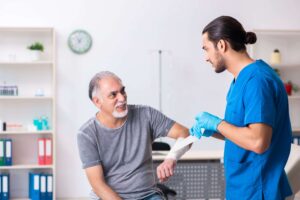 Aging affects every part of the body, including the structure and function of the skin. When you age, wound healing slows down because the skin is thinner. However, age isn’t the only factor that can affect wound healing and recovery. Some of the other factors can include:
In order to understand the impact of aging on the healing process, it’s important to first explore how wounds heal in general. While the process can vary depending on several factors such as the severity and location of the wound as well as preexisting medical conditions, typically wound healing takes place in three main stages.
Inflammatory Phase
Proliferation Phase
Maturation Phase
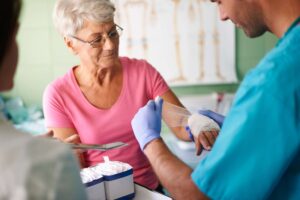 Each phase of the wound healing process is affected among the elderly, resulting in a more delayed recovery time. In fact, any interference with the wound healing phases is said to delay healing by 20-60%. Let’s break down why older adults are more prone to injuries and why age can play a role in how effectively wounds heal.
Not only do wounds tend to heal more slowly with age but many chronic wounds such as diabetic or venous ulcers, arterial insufficiency, and pressure ulcers have been known to be associated with conditions that often occur in older individuals. Further, surgery is also common among older adults, increasing the risk of potential wound complications.
One example of these age-related diseases that can impair wound healing is diabetes. As we age our risk of developing diabetes dramatically increases. Those suffering from diabetic wounds often have circulation problems and necessary nutrients and oxygen don’t reach the wound site resulting in slow healing.
Changes to the skin are one of the most obvious signs of aging and can have a direct impact on wound healing. In fact, it’s said that skin injuries in older adults can take up to four times longer to recover compared to younger individuals.
This is partly due to the effect of aging on the cells within the body. In many elderly patients, cells divide more slowly or in some cases not at all (a condition referred to as senescence). The body also has a more difficult time producing fat cells under the skin. These effects are one of the reasons why the elderly have thin skin and are more prone to wounds or injuries.
Additionally, after a wound, the skin doesn’t heal as quickly or properly. These aging cells take longer to regrow skin and won’t be able to guard the body against bacteria, increasing the risk of infection. Research also indicates that cells that don’t divide may also increase inflammation and damage surrounding tissue; impeding the healing process.
These changes also increase the risk of pressure wounds because:
Lack of physical activity and poor nutrition can also play a role in wound healing and risk of injury. Elderly people with poor nutrition are typically at higher risk of bone fractures, more likely to need extended hospitalization stays, and have lower success rates of treatments. While everyone requires energy to heal this is especially crucial for elderly patients who are at greater risk of malnutrition and tend to heal more slowly.
If you are seeking help from a wound care specialist ask them for dietary and nutrition recommendations. The top professionals will work closely with each patient’s nutritionist and physical therapist to coordinate care and optimize healing.
 While in many cases, serious wounds should be treated by a wound care specialist or healthcare professional – especially if you are an older adult – there are a few things you can do to help minor wounds heal more effectively. Below are a few tips:
Any opening in the skin can become infected, which is why it’s imperative that you are aware of the signs of an infection and check for them often. If you notice any of the following signs, contact a doctor or medical professional immediately.
If you have suffered a serious wound or have a wound that won’t heal the specialists at West Coast Wound and Skin Care are here to help. We know it can be difficult for older patients to leave home for the care they need, that is why we provide our full range of high-quality, full-spectrum wound care services to patients from the convenience of their homes.
Whether you are in an assisted living facility, skilled nursing home, or at your own residence our skilled medical professionals can help manage your wound and ensure it heals correctly. We also invite you to visit our new wound care center where our physicians provide the full spectrum of wound care and treatments.
Don’t wait until your wound gets worse, contact us and book an appointment today.
[/fusion_text][/fusion_builder_column][fusion_builder_column type=”1_3″ layout=”1_3″ spacing=”” center_content=”no” link=”” target=”_self” min_height=”” hide_on_mobile=”small-visibility,medium-visibility,large-visibility” class=”” id=”” hover_type=”none” border_color=”” border_style=”solid” border_position=”all” border_radius=”” box_shadow=”no” dimension_box_shadow=”” box_shadow_blur=”0″ box_shadow_spread=”0″ box_shadow_color=”” box_shadow_style=”” padding_top=”” padding_right=”” padding_bottom=”” padding_left=”” margin_top=”” margin_bottom=”” background_type=”single” gradient_start_color=”” gradient_end_color=”” gradient_start_position=”0″ gradient_end_position=”100″ gradient_type=”linear” radial_direction=”center center” linear_angle=”180″ background_color=”” background_image=”” background_image_id=”” background_position=”left top” background_repeat=”no-repeat” background_blend_mode=”none” animation_type=”” animation_direction=”left” animation_speed=”0.3″ animation_offset=”” filter_type=”regular” filter_hue=”0″ filter_saturation=”100″ filter_brightness=”100″ filter_contrast=”100″ filter_invert=”0″ filter_sepia=”0″ filter_opacity=”100″ filter_blur=”0″ filter_hue_hover=”0″ filter_saturation_hover=”100″ filter_brightness_hover=”100″ filter_contrast_hover=”100″ filter_invert_hover=”0″ filter_sepia_hover=”0″ filter_opacity_hover=”100″ filter_blur_hover=”0″ last=”true” border_sizes_top=”0″ border_sizes_bottom=”0″ border_sizes_left=”0″ border_sizes_right=”0″ first=”false” spacing_left=”1.3333333333333333%”][fusion_widget_area name=”avada-blog-sidebar” title_size=”” title_color=”” background_color=”” padding_top=”” padding_right=”” padding_bottom=”” padding_left=”” hide_on_mobile=”small-visibility,medium-visibility,large-visibility” class=”” id=”” /][/fusion_builder_column][/fusion_builder_row][/fusion_builder_container]