With chronic and complex wounds, precision in documentation is an important part of advanced wound care. The standards that govern wound documentation have changed considerably in recent years, shaped by updates from regulatory bodies and a growing emphasis on transparency, compliance, and clarity.
In many ways, American wound documentation standards have significantly changed, but much has also stayed the same. Here at West Coast Wound Care, we utilize proper documentation while helping patients recover through reliable, evidence-informed care.

Wound documentation is not just a clinical formality—it directly affects patient care, reimbursement eligibility, and legal compliance. As wound care becomes more data-driven and regulated, accurate documentation has never been more important. When we write “accurate wound documentation,” we mean:
We integrate strong documentation protocols in all of our care settings so as to provide a seamless experience, no matter where our patients receive care.
National documentation expectations are shaped by organizations such as the Centers for Medicare & Medicaid Services (CMS), the National Pressure Injury Advisory Panel (NPIAP), and others. To be in proper alignment, we adhere to detailed documentation protocols during each stage of wound care.
Essential wound documentation components we can include but are not limited to:
We record these components at every visit to comply with CMS reimbursement rules and ensure consistent care delivery.
Recent rule changes have placed greater emphasis on the reasoning behind treatment decisions—not just the clinical facts. Updated federal standards now require us to demonstrate the medical necessity of advanced wound care through detailed, patient-specific narratives rather than copy-pasted notes or general templates.
This shift is largely due to heightened scrutiny by CMS and Medicare Advantage plans. Prefilled templates or drop-down charting tools are no longer considered adequate. Instead, we must clearly document:
We meet these standards by creating clear, personalized narratives. We include descriptive entries that reflect our clinical reasoning, showing how each wound is evaluated and managed individually. This detailed documentation helps reduce denials, enhances communication across care teams, and reinforces our commitment to high standards.
While electronic health records (EHRs) have simplified tracking, overreliance on automation has its risks. Automated tools that pre-fill or copy previous entries can miss changes in a wound’s condition. Inaccurate or outdated documentation can jeopardize both patient safety and reimbursement.
Regulatory agencies now expect more than templated notes. CMS auditors and payers look for:
We’ve built our documentation strategy around clinician-guided input rather than passive automation. Our team uses digital tools to assist—but not replace—judgment and observation. Each wound evaluation is conducted in real time and entered with precision and accuracy.
The classification and staging of pressure injuries, like so much else related to wound care, continuously evolves.. NPIAP regularly updates its guidelines to enhance accuracy and consistency in wound reporting. These updates include:
Misclassification or failure to follow these definitions can lead to inaccurate care planning and potential reimbursement issues. We stay current on the latest NPIAP pressure injury staging so we can correctly identify and document each pressure wound type, ensuring patients receive the right treatment from the start.
At West Coast Wound Care, we take wound assessment documentation seriously because we know its importance in both clinical and regulatory settings. We invest in continual training to ensure that our staff remains current with:
This training supports our structured, evidence-based documentation process—allowing us to deliver care that is thorough, compliant, and tailored to each patient.
Our documentation process supports every phase of our treatments. We adjust care plans based on healing trends, patient input, and clinical outcomes—all of which we capture in secure, accurate wound records.
In advanced wound care, documentation is more than a requirement—it’s a reflection of how closely we observe, assess, and care for each wound. Our dedication to clear, individualized, and regulation-compliant documentation allows us to deliver a level of care that is both safe and effective.
By keeping up with the latest standards and continuously refining how we document, we ensure that every wound is managed with accountability, transparency, and clinical rigor. If you or someone you care about is dealing with a complex wound and looking for attentive, evidence-informed care, we’re here to help—wherever you are. Contact us to make an appointment today and see how we can help.
Maintaining accurate, timely, and legally compliant patient records is an essential responsibility in wound care. At West Coast Wound Care, we provide specialized wound management services both in clinical settings and through mobile care. Part of our commitment to patient care includes adhering to all legal standards regarding medical recordkeeping.
Whether we’re treating patients in our clinics or through mobile services, we follow strict documentation and retention regulations set by federal and state authorities. These laws ensure that patient data remains confidential, accessible, and useful for treatment, reimbursement, legal review, auditing, and more.
In wound care, documentation is more than clinical—it’s legal. We must accurately and thoroughly document wound characteristics, interventions, progress, and outcomes while ensuring records are retained and secured appropriately.
Legal compliance in recordkeeping ensures:
Proper documentation is especially important when we’re transitioning patients between mobile and clinic-based services. Every provider interacting with the patient needs access to updated, detailed records to ensure continuity of care.
Federal regulations govern how long records must be maintained, how data is protected, and what systems we must have in place to manage and store those records.
HIPAA establishes national standards to protect patient health information (PHI). We implement policies and technical safeguards to ensure the confidentiality, integrity, and availability of medical records.
Under HIPAA, we must:
We apply HIPAA-compliant systems and workflows to safeguard all patient wound records, including those we collect during mobile visits.
This federal rule requires that patients be given easier access to their electronic health records (EHRs), including clinical notes and updates. We are prohibited from taking actions that unreasonably delay or block a patient’s access to their health data.
This impacts our wound management documentation by:
We’ve made sure that our approach to EHRs and patient communication aligns with these federal expectations, so patients have access when they need it.
Good wound documentation isn’t just about compliance—it directly impacts the effectiveness of care and reimbursement. To meet clinical and legal standards, we follow best practices such as:
Incomplete or inconsistent wound records can cause delays in healing, reimbursement denials, or legal vulnerability. That’s just one of the reasons why we emphasize thorough, real-time documentation every step of the way, whether we’re at a clinic or a patient’s home.
We’ve developed systems and internal training that ensure each member of our team meets legal and clinical documentation standards.
These systems include:
By focusing on documentation excellence, we go beyond compliance—we support truly patient-centered wound care across every setting.
Good documentation helps us determine how a wound is healing—or why it may not be. With legally compliant, detailed records, we can better understand:
We use this information to adjust treatment plans, ensure continuity of care, and better support each patient’s unique healing process.
We Prioritize Recordkeeping Because It Supports Healing
Legal compliance in wound care documentation isn’t just a box we check—it’s a foundation for everything we do. From HIPAA and CMS to state retention laws, we uphold high standards to protect our patients and support quality care.
At West Coast Wound Care, we meet and often exceed these standards across all our services. Our mobile and clinic-based teams know that accurate, secure, and timely documentation isn’t just good practice—it’s vital to effective healing. If you or a loved one needs trusted, compliant, and personalized wound management, reach out to us today. We’re here to help. Schedule a free appointment today to see how we can help you and yours.
The new year often brings a renewed focus on health and well-being. If you’re in the Riverside area and dealing with a wound that just won’t heal, it’s time to seek expert care. West Coast Wound and Skin Care provides a comprehensive range of wound care services in Riverside, ensuring that you receive the appropriate treatment for your specific needs.
At West Coast Wound and Skin Care, we believe in a patient-centered approach to chronic wound care. We understand that each wound is unique, and we tailor our treatment plans to meet your individual needs and goals. Our team of experienced wound care specialists utilizes the latest technologies and evidence-based practices to promote optimal healing and prevent complications.
Seeking professional wound care offers several benefits:
This new year, make a resolution to prioritize your health and seek expert care for any non-healing wounds. Early intervention is key to preventing complications and achieving optimal healing.
The National Institutes of Health (NIH) reports that chronic wounds cost the U.S. healthcare system an estimated $25 billion annually.
The Wound Healing Society emphasizes the importance of early intervention and specialized care in the management of chronic wounds.
West Coast Wound and Skin Care is your trusted partner in wound care. Our comprehensive wound care services in Riverside are designed to promote healing, prevent complications, and improve your overall well-being. Don’t let a non-healing wound hold you back. Contact us today to schedule a consultation and start your journey towards healing.
The new year is a time for fresh starts and renewed commitments to health and well-being. For those living with chronic wounds, this can mean taking a proactive approach to wound care and seeking specialized treatment. West Coast Wound Center in Fresno offers comprehensive wound care and and skin care services in the largest city in the greater Central Valley region. Combining cutting-edge technology with evidence-based medicine, West Coast Wound and Skin Care help you reach optimal healing.
At West Coast Wound and Skin Care, we understand the complexities of wound healing. Our team of experienced wound care specialists provides personalized treatment plans tailored to each patient’s needs. We utilize advanced wound care techniques and products to accelerate healing and prevent complications.
The new year is a perfect time to re-evaluate your health habits and make positive changes that support your body’s natural healing abilities. If you’re living with a chronic wound, consider these resolutions to promote faster healing and improve your overall well-being:
Proper hydration is crucial for wound healing. Water plays a vital role in cell regeneration, nutrient delivery, and waste removal. Aim to drink at least 8 glasses of water per day to keep your skin hydrated and support the healing process.
According to the National Academies of Sciences, Engineering, and Medicine, adequate daily fluid intake is about 15.5 cups (3.7 liters) of fluids for men and about 11.5 cups (2.7 liters) of fluids a day for women. *Remember that this is a general guideline, and individual needs may vary.
Extra Tip: Carry a reusable water bottle with you throughout the day as a visual reminder to stay hydrated. You can also increase your fluid intake by consuming hydrating foods like fruits and vegetables.
Eating a balanced diet rich in fruits, vegetables, and lean protein provides the essential nutrients your body needs to repair tissues and fight infection. Focus on foods high in Vitamin C (like citrus fruits and berries), Vitamin A (found in leafy greens and orange vegetables), and zinc (found in beans, nuts, and whole grains), as these nutrients play key roles in wound healing.
Extra Tip: Consider incorporating protein shakes or smoothies into your diet to ensure you’re getting enough protein for tissue repair.
Smoking significantly impairs circulation and slows down the healing process. Nicotine constricts blood vessels, reducing blood flow to the wound site and delaying the delivery of oxygen and nutrients essential for healing. Quitting smoking is one of the best things you can do for your overall health and wound healing.
Chronic stress can negatively impact your immune system and hinder wound healing. When you’re stressed, your body releases cortisol, a hormone that can interfere with the inflammatory response necessary for healing. Practice stress management techniques like meditation, yoga, or deep breathing exercises to reduce stress levels and promote a healing environment within your body.
Extra Tip: Set aside a few minutes each day for relaxation and mindfulness. Even short periods of deep breathing or meditation can make a significant difference in your stress levels.
Regular exercise improves circulation and promotes overall health, which can aid in wound healing. Even moderate exercise can increase blood flow, delivering oxygen and nutrients to the wound site and helping to remove waste products. Consult with your doctor or physical therapist for safe exercise options that won’t put undue stress on your wound.
Extra Tip: If you have limited mobility, consider chair exercises or gentle stretching to improve circulation and maintain flexibility.
By incorporating these resolutions into your New Year’s plan, you can take a proactive approach to wound healing and improve your overall health and well-being.
West Coast Wound and Skin Care is your trusted partner in wound healing. Our wound center Fresno provides comprehensive care for all types of wounds, helping you achieve optimal healing and regain your quality of life.
We believe that advanced professional wound dressings should be exactly that: advanced and professional. You should never have to settle when it comes to your wound dressings or any other wound care services. The tactics used today are more sophisticated than ever before, designed to promote faster healing, minimize scarring, and reduce or eliminate complications. Our wound care services treat not just the wound, but the whole person.
Modern wound dressings are designed not just to stop the wound from spreading or worsening, they are also designed to create a specific environment that aids in the skin’s natural regenerative process. For wounds to heal effectively, they must be shielded from external elements that could hinder recovery.
While older methods, such as applying Vaseline and a bandage, aimed to do this, modern dressings go further and do so more effectively. For example, many of our wound dressings create a protective, permeable barrier that is not only waterproof but also designed to encourages the necessary moisture levels for healing. By doing so, this accelerates the regeneration of healthy skin, reducing the time it takes for wounds to heal all the while decreasing the likelihood of infections or other complications.
Keeping an open wound free from dirt, debris, and bacteria is essential for proper healing, and professional products ensure that the wound remains clean throughout the healing process.
Without adequate sterilization, wounds are prone to infections that can delay recovery, leading to additional complications. Our modern products provide a level of sterilization that surpasses traditional methods, helping to protect the wound from harmful bacteria while facilitating faster healing.
When we examine your wounds, we’ll determine the right dressing for your needs.
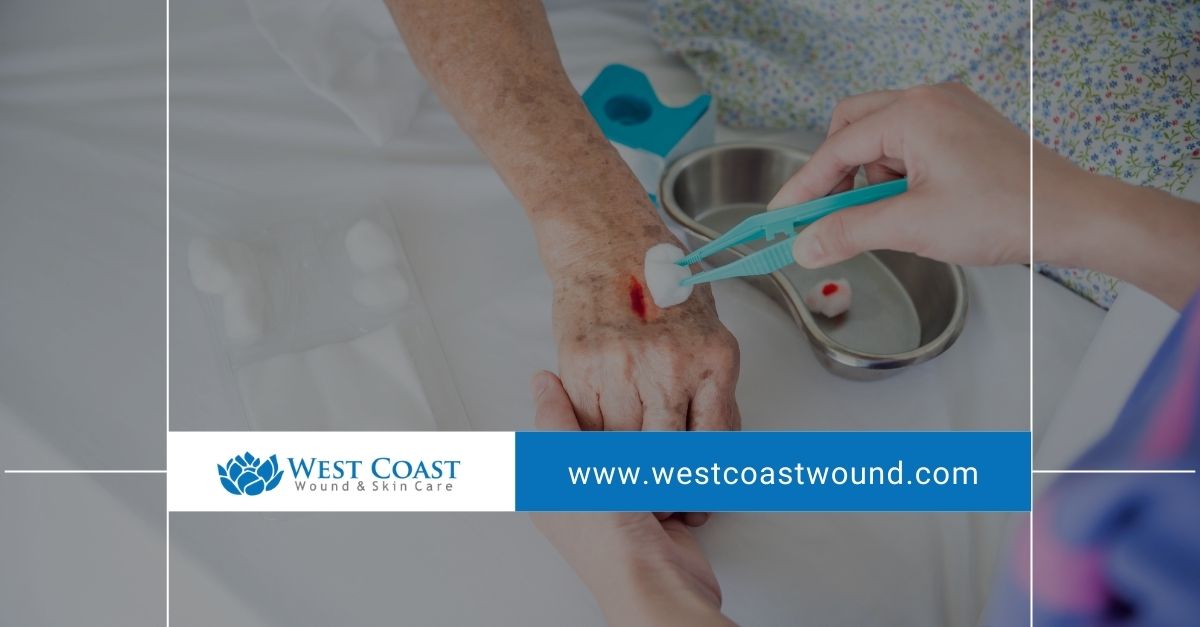
Debridement is an important procedure for removing devitalized tissue from a wound. Removing dead or infected tissue can prevent further complications, such as sepsis, and create a clean environment that promotes healing. At West Coast Wound Care, we utilize a range of debridement techniques depending on the specific needs of the patient and the wound.
Sharp debridement, for example, is a surgical method used for fast removal of necrotic tissue. This method could be highly effective in cases where time is of the essence. For less urgent or complex wounds, other methods may be used. These techniques rely on the body’s natural enzymes, or externally applied enzymes, to gently break down and remove devitalized tissue.
Mechanical debridement, using materials such as gauze or irrigation, is a method by which we physically remove unhealthy tissue. Though somewhat more aggressive, it can be an effective way to clean the wound and prepare it for healing.
At West Coast Wound Care, debridement is considered an essential strategy in managing complex wounds, particularly those that contain necrotic tissue or biofilm. By removing sources of infection and stimulation, debridement helps to reset the healing process and encourage the wound to progress through its natural phases of recovery.
When we go over your wound, we’ll let you know all of your options. For example, your debridement technique depends on several factors, including the location and depth of the wound, the health of the surrounding tissue, and your overall condition.
When wounds are given a chance to heal in an ideal environment (such as your home), the risk of scarring can be significantly minimized. This is particularly important for patients undergoing procedures that typically leave scars, such as surgeries. By using products that foster optimal healing conditions, we can reduce the chances of developing noticeable scars or other skin issues.
Our mobile wound care is truly, genuinely mobile. We can come to you, so that you can receive the treatment you need in an environment of your choice.
A multidisciplinary approach is often the most effective way to manage complex wounds. At West Coast Wound Care, our team all works together to provide comprehensive care. Proper wound management, combined with debridement and advanced wound dressings, can significantly improve outcomes, even for wounds that have been slow to heal.
While chronic or complex wounds may take months to fully heal, debridement and the use of professional wound dressings can dramatically enhance the healing process. We’re committed to offering the best possible care for our patients, helping them navigate the complexities of wound healing with the latest advancements in wound care technology.
Of course, it’s important to keep in mind that with all this talk of wound dressings, debridement, and the like, we never just treat the wound. Always, we employ a holistic approach, treating the entire person. We’ve found that leads to the best results, both in the short and long term.
To see how we can help, message us through our site or call.
The holiday season is a time for joy, celebration, and creating cherished memories with loved ones. However, it’s also a time when accidents and injuries can happen, potentially putting a damper on your festivities. From kitchen mishaps and decorating falls to burns from fireplaces and outdoor hazards, taking precautions to prevent injuries is crucial for a healthy and happy holiday season. In this blog post, we’ll discuss the importance of seeking care from a trusted wound center in Fresno, explore common holiday-related wound care challenges, and highlight how West Coast Wound and Skin Care can help you achieve optimal healing and enjoy a healthy holiday season.
West Coast Wound and Skin Care in Fresno is dedicated to providing compassionate and comprehensive wound care services. We understand that accidents can happen, even with the best intentions, and we’re here to support your healing journey if you do experience an injury. But we also believe in the power of prevention.
Increased cooking and baking activities can lead to cuts, burns, and scalds. According to the National Safety Council, cooking fires are the leading cause of home fires and home fire injuries.
Hanging lights, decorating trees, and setting up festive displays can lead to falls, electrical shocks, and lacerations.
Fireplaces, space heaters, and candles can cause burns and fires if not used cautiously.
Icy sidewalks, slippery steps, and outdoor decorations can increase the risk of falls and injuries.
If an injury does occur, prompt and proper wound care is essential for preventing complications and promoting healing. According to the American College of Surgeons, early wound care can significantly reduce the risk of infection and scarring.
Properly cleaning and assessing the wound to determine the appropriate wound care treatment.
Applying appropriate dressings and bandages to protect the wound and promote healing.
Implementing measures to prevent and treat infection.
Removing damaged or dead tissue to facilitate healing.
Utilizing advanced wound care technologies, such as negative pressure wound therapy and hyperbaric oxygen therapy, when necessary.
West Coast Wound and Skin Care is committed to providing compassionate and personalized wound care. Our team of experienced professionals utilizes advanced technologies and evidence-based practices to address a wide range of wound types and skin conditions.
We understand that dealing with wounds can be challenging, especially during the holidays. Our goal is to provide you with the support and care you need to achieve healing and enjoy a healthy and fulfilling holiday season.
By taking precautions and prioritizing safety, you can significantly reduce your risk of holiday injuries. However, if an accident does occur, seeking prompt and specialized wound care is crucial for optimal healing.
West Coast Wound and Skin Care is your trusted partner in wound care, providing comprehensive services and compassionate support to help you heal and enjoy a healthy and happy holiday season.
Contact West Coast Wound and Skin Care today to learn more about our services or to schedule an appointment.
At West Coast Wound Care, we understand that some wounds take longer to heal than others. When a wound doesn’t heal within the expected timeframe, it’s classified as a chronic wound. These types of wounds can be challenging, both physically and emotionally, but with proper care and attention, help is possible. We can provide chronic wound care in the privacy, convenience, and comfort of your own home.
One of the questions we’re most commonly asked is some form of: “what can I do for my chronic wounds?” Whether you’re treating your chronic wounds or those of a loved one, there are steps you may be able to take. Now, hopefully, these can help, but, if you or someone you love has wounds that linger, it’s worth it to reach out to the professionals.
At West Coast Wound Care, we work closely with patients and their healthcare providers to develop individualized care plans for chronic wounds. Below are some tips that can help. If you have any further questions or require assistance, we can help.
Taking your medications as prescribed is one of the most important things you can do to aid in the healing of a chronic wound. If your doctor has prescribed medication, it’s crucial to complete the full course, even if you begin to feel better before finishing. Stopping too soon can allow bacteria to survive and potentially lead to further complications. This may sound basic, but you might be utterly amazed at how many people don’t follow this exact advice.
When we sit down with you to go over your wound care, we’ll make sure to create a treatment plan that fits into your life and meets your needs.
Eating a healthy diet is another key component of wound healing. Your body is unique, unlike anyone else’s. That said, when healing from a chronic wound, you’ll most likely require a healthy diet that helps your body. Often, this includes balanced meals with plenty of vegetables and fruits rich in vitamins A and C, like oranges, cantaloupe, and carrots.
Protein is essential for tissue repair, so include sources like meat, eggs, dairy, and legumes in your diet. If that doesn’t sound viable or it doesn’t fit you, we can help here as well. We’ll go over your nutrition with you, helping you to find the right diet for you right now.
Staying hydrated is also important, as water helps transport nutrients and remove waste from your body, both of which are essential for the healing process. Drink plenty of fluids throughout the day, and if you have conditions like kidney or heart disease that require fluid restrictions, consult your doctor before increasing your fluid intake.
It’s important to note that, when we say “physical activity,” we don’t mean that you have to go to the gym for hours on end, hike up a mountain, etc. Walking, for example, improves circulation to your legs and can promote faster healing. We’ll assist you in devising a fitness plan that helps your life where you are right now.
While physical activity can be so beneficial to your health, it may very well also be important to keep pressure off the wound. If the wound is in a location prone to pressure from sitting or lying down, make an effort to change positions frequently. Even small shifts in weight can help reduce pressure on the wound and promote better circulation to the area. Pressure-relieving supports, such as cushions or mattresses designed to reduce strain on certain areas of the body, can be beneficial as well.
If your wound is accompanied by swelling, you may benefit from compression stockings or similar accouterments. These can help reduce swelling and improve circulation, which is vital for healing. Additionally, elevating the affected area, particularly if it’s a leg or foot wound, can further reduce swelling. When sitting or lying down, try to keep the wounded area elevated above the level of your heart.
Chronic Wound Care and Beyond
At West Coast Wound Care, we are committed to providing patients with the support and expert care they need to heal chronic wounds effectively. By following these steps and working closely with your care team, you can improve your chances and your health.
If you want to receive wound care without leaving your home, nursing home, or assisted living facility, we can help. You can reach us by calling or messaging us through our site.